April 28, 2026
Meal Planning for Families: Save Money Every Week
Meal planning for families can cut your grocery bill by hundreds a year. Here's exactly how to start saving money this week.
By ChefDeck
· 7 min read

Meal planning for families puts real money back in your pocket every single week — without clipping a single coupon. Families who plan their meals consistently spend significantly less at the grocery store, waste less food, and make far fewer expensive last-minute takeout runs. If your grocery bill feels out of control, a simple weekly plan is the fix.
Why Meal Planning for Families Actually Saves Money
The math is straightforward. The average American family throws away roughly $1,500 worth of food every year — most of it produce and proteins that were bought without a clear plan for using them. Add in two or three unplanned takeout dinners a week at $40–$60 a pop, and you can see where the budget disappears.
When you plan ahead, you buy only what you need, you use up what you buy, and you're never standing in the kitchen at 6 p.m. with no idea what's for dinner. That 6 p.m. panic is where budgets go to die. Planning eliminates it entirely.
Beyond the obvious grocery savings, meal planning also reduces impulse buys. When you walk into the store with a list, you're far less likely to toss random items in the cart "just in case."
How to Build a Budget-Friendly Weekly Meal Plan
You don't need a complicated system. A simple weekly routine — even 20 minutes on Sunday — is enough to transform how your family eats and spends.
- Check your pantry first. Before you plan a single meal, look at what you already have. Build at least one or two dinners around existing ingredients so nothing goes to waste.
- Plan around sales and what's in season. Check your store's weekly circular before you write your menu. Chicken thighs on sale? Build two meals around them.
- Choose recipes with overlapping ingredients. If you're buying a bag of shredded cheese, plan two or three meals that use it — tacos, a casserole, quesadillas. This single habit slashes waste dramatically.
- Include at least one "use it up" meal toward the end of the week — a fried rice, a soup, or a stir-fry that clears out whatever's left in the fridge.
- Write a specific grocery list organized by store section. This keeps you focused and cuts shopping time in half.
ChefDeck lets you save recipes, drag them into a weekly plan, and auto-generate your grocery list — so Sunday planning takes 10 minutes, not 30. Instead of juggling browser tabs and handwritten notes, everything lives in one place and your list builds itself as you add meals to your week.
The Best Cheap Easy Dinners for Your Family Meal Plan
Budget-friendly family meals don't have to be boring. Some of the most satisfying weeknight dinners cost under $10 for the whole family when you buy smart and plan ahead. The key is leaning into recipes that stretch affordable proteins — ground beef, chicken thighs, eggs, and beans — and pair them with inexpensive staples like rice, potatoes, and pasta.
A few reliable go-tos that work beautifully in a weekly plan:
- A Cheesy Taco Beef Casserole feeds a crowd for just a few dollars a serving and uses pantry staples you likely already have.
- BBQ Chicken Stuffed Potatoes are a great way to stretch one rotisserie chicken into a full family dinner with very little effort.
- For a meal that practically cooks itself, a Creamy Chicken and Rice Bake combines everything in one pan — less cleanup, less cost, more comfort.
- Smoky Black Bean Quesadillas are a budget superstar — beans cost almost nothing, and the whole meal comes together in under 20 minutes.
These are exactly the kinds of recipes worth saving and rotating through your plan every month. Familiarity with a core set of budget meals is one of the biggest money-saving habits experienced home cooks share. For even more ideas, check out our roundup of easy family casseroles under $10 for busy weeknights.
Smart Grocery List Habits That Protect Your Budget
Your meal plan is only as good as the grocery list it produces. A few habits here make a huge difference:
- Never shop hungry. It sounds obvious, but it's genuinely one of the most expensive mistakes families make consistently.
- Buy store-brand staples. Canned tomatoes, dried pasta, rice, broth — store brands are typically 20–40% cheaper and taste identical in cooked dishes.
- Buy larger packs of protein and freeze what you won't use that week. A family pack of chicken thighs is almost always cheaper per pound than smaller packages.
- Stick to your list. If something isn't on it, put it back. Impulse items are where grocery budgets silently balloon.
How to Make Meal Planning a Habit That Actually Sticks
The biggest reason families abandon meal planning isn't lack of motivation — it's that the system feels like too much work. The fix is to keep it as simple as possible, especially at the start.
Start with just planning dinners. Lunches and breakfasts can follow later once the habit is solid. Pick five dinners, leave two nights flexible for leftovers or a simple "breakfast for dinner" fallback, and call it done. That's a complete, money-saving plan.
Rotate a shortlist of 10–15 family-approved recipes so you're never starting from scratch. Keeping those recipes somewhere accessible — not scattered across Pinterest boards and browser bookmarks — makes the weekly planning session fast and painless.
Frequently Asked Questions About Family Meal Planning
How much money can meal planning save a family?
The savings add up faster than most families expect. The average American household wastes roughly $1,500 worth of food per year — and that doesn't include unplanned takeout. Families who plan consistently report cutting their weekly grocery bill by $50–$150, depending on household size and how often they were previously ordering in. Over a full year, that's anywhere from $2,600 to $7,800 back in your budget.
How do I start meal planning for beginners?
Keep it as small as possible at the start. Pick just five dinners for the week, build a grocery list around exactly those meals, and leave two nights open for leftovers or a simple fallback like eggs and toast. Once the five-dinner habit feels automatic — usually after two or three weeks — you can start layering in lunches, batch cooking, and smarter shopping strategies. Don't try to overhaul everything at once.
What are the best budget meals for families?
The best budget meals lean on affordable proteins and pantry staples that stretch across multiple dishes. Recipes like a hearty Cheesy Taco Beef Casserole or quick Smoky Black Bean Quesadillas cost just a few dollars per serving, come together fast on a weeknight, and are reliably popular with kids and adults alike. Building your rotation around eight to ten proven winners means you'll rarely feel stuck deciding what to cook.
Start Saving Money on Groceries This Week
You don't need a perfect system on day one. Pick three dinners for the coming week, write a focused grocery list based on those meals, and see how much less you spend compared to a typical week. Most families notice a difference immediately. Once you experience the combination of a calmer kitchen, less food waste, and a lower grocery bill, meal planning stops feeling like a chore and starts feeling like the obvious way to run a household.
Ready to make it even easier? Start your free meal plan in ChefDeck — save your favorite budget recipes, drag them into a weekly calendar, and let the app build your grocery list automatically so nothing gets missed, nothing gets wasted, and dinner is always handled.
More from the blog
Jun 9, 2026
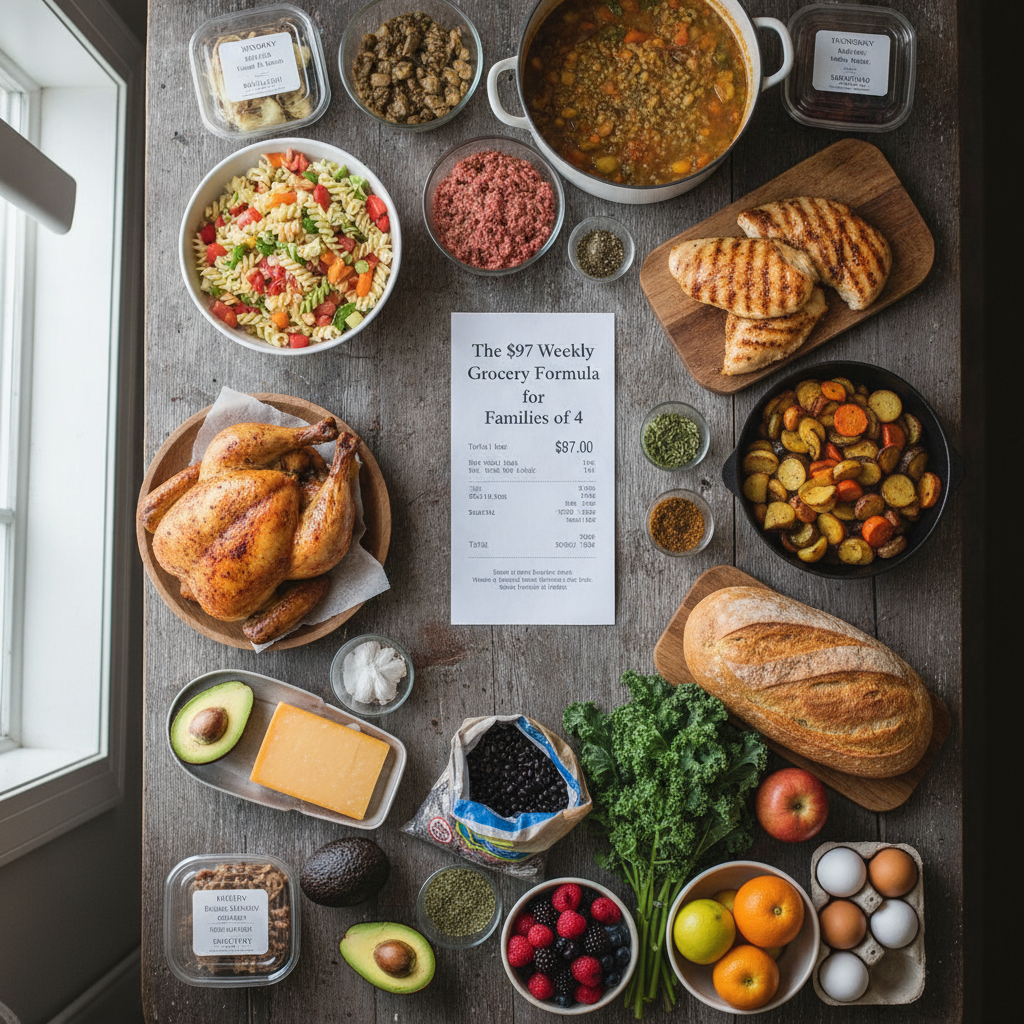
The $97 Weekly Grocery Formula for Families of 4
A repeatable weekly grocery formula, backed by a real $97 receipt, that feeds a family of four on under $100 without eating the same meals every week.
Jun 6, 2026
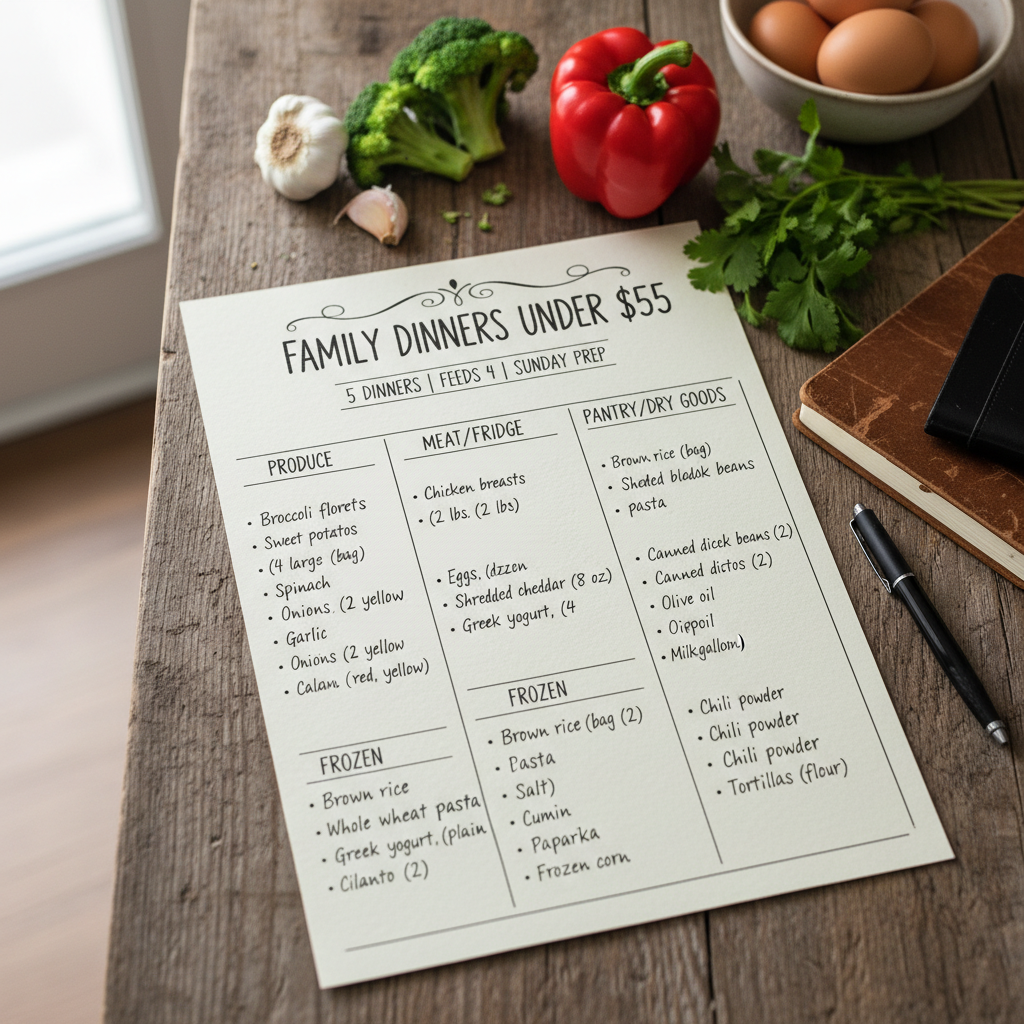
Meal Prep Grocery List Template for 5 Dinners Under $55
A ready-to-copy grocery list template, organized by store section, that cuts Sunday shopping time and keeps a family of 4 under $55 for 5 dinners.
Jun 5, 2026
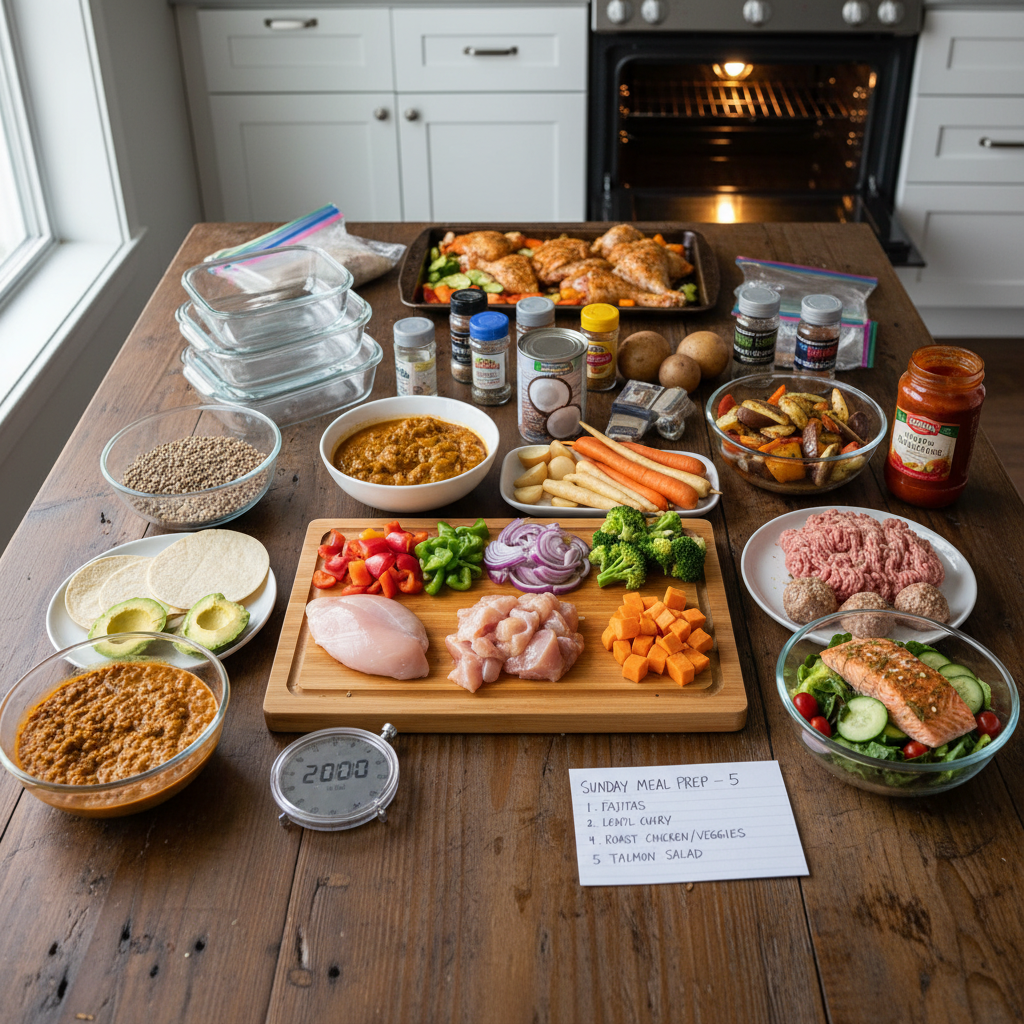
How to Meal Prep 5 Dinners in One Sunday Afternoon (2-Hour Routine)
Follow this timed two-hour Sunday routine — one oven, one burner, one cutting board — and walk away with five real weeknight dinners without a plan falling…
— Try ChefDeck free
Put this into practice this week.
Every new account starts with 14 days of Pro free — no card required.
Get started free